The Pear Tree
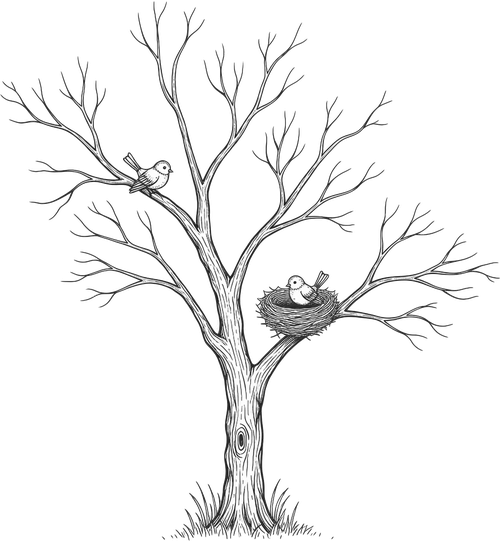
The old pear tree
stood near the lower gardens
beside the valley wall.
For many years,
it had fed the entire household.
Each autumn,
its branches bent low
with heavy fruit.
Children climbed its limbs.
Neighbors carried baskets
beneath its shade.
The gardener
once measured the seasons
by the ripening pears.
The tree had become
part of the rhythm
of the garden.
But slowly,
the tree changed.
One spring,
fewer blossoms appeared.
The next year,
only a handful of pears
survived the summer.
Then finally,
one season came
when the tree
bore nothing at all.
The tree stood silent
through the harvest months
while the younger trees
overflowed with fruit nearby.
Visitors began glancing toward it
with practical eyes.
“It takes space,”
one remarked.
Another pointed
to the dry limbs
near the crown.
Even the gardener
stood beside the trunk,
resting both hands
upon the bark.
He said nothing.
Cold wind moved softly
through the bare branches.
Spring returned.
Rain softened the garden paths.
The younger pear trees
filled again
with pale blossoms.
Then one morning,
the gardener noticed
small birds
darting in and out
of the old tree’s branches.
A nest rested safely
between two thick limbs
high above the wall.
Soon there were more.
Sparrows.
Finches.
A pair of wrens nested
beneath the crooked western branch.
All spring long,
quiet movement
and birdsong
filled the old pear tree.
The gardener
began leaving seeds
beneath its shade.
By summer,
children sat beneath the branches
listening for hatchlings
instead of gathering pears.
The old tree
still gave something
to the garden.
Only now,
it gave shelter
instead of fruit.